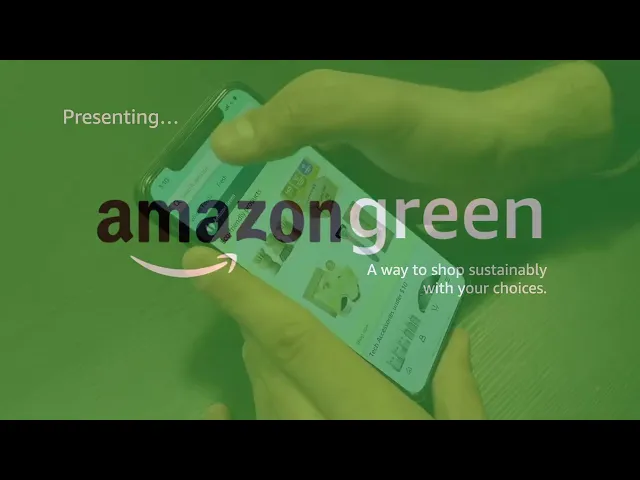
Amazon Green
Green helps customers shop more sustainably with eco-friendly products, packaging, and delivery options. Customers earn points for greener choices, which can be redeemed for exclusive rewards.
Project:
Personal Thesis Project
Time:
20 weeks
Role:
UX Designer role

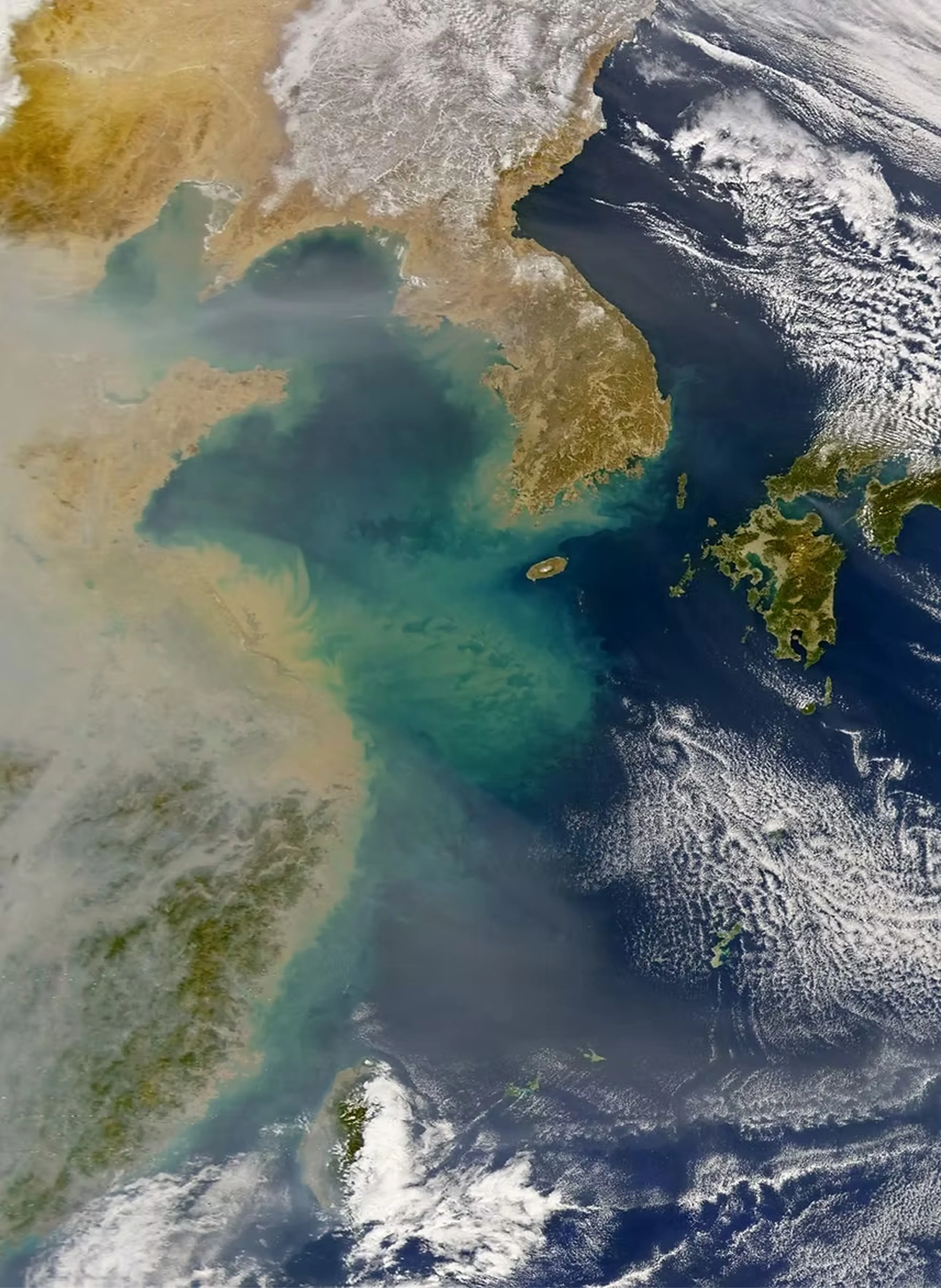
The e-commerce channel today is the biggest contributor to pollution. In response, Green, which will be a part of Amazon (a leading e-commerce company), will help customers make sustainably mindful decisions while shopping on their AWS app.
These choices will include shopping for eco-friendly products, opting for green packaging and sustainable shipping options, and walking to a store. As an incentive, green shoppers will earn points for their efforts, which can be used to receive rewards that contribute to giving back to society.
The Problem
With the click of a button, our groceries, clothes, personal care products, household items – just about anything could arrive on our doorsteps in a neatly packaged cardboard box. It’s convenient and delivered right to us, but at what cost?
Online purchases in the US approached $400 billion in 2016 and now account for 8% of overall retail spending. On average, the e-commerce channel tends to produce more emissions per item for three reasons: it requires additional packaging, customers purchase fewer items per transaction, and multi-item orders often lead to multiple deliveries. As shopper demands increase, so does their carbon footprint, resulting in a negative impact on the environment and promoting unsustainability.

Concept Testing
Determine whether eco-conscious consumers are willing to change their behavior to be more sustainably mindful while shopping online, and if the concept is worth pursuing.
12 participants
Preference for Sustainability: The majority of users want e-commerce sites to be more environmentally conscious.
Carbon Footprint Display: Users support the idea of displaying carbon footprints but are concerned about potential disruptions or inconveniences to their shopping experience.
Trust Issues: There is skepticism about the authenticity of sustainability algorithms, with users seeking reliable safeguards to ensure accuracy.
Tangible Impact: Users appreciate the concept of converting reduced carbon footprints into tangible environmental benefits, such as saving trees.
Competitive Analysis
Understanding what the competitors are doing to encourage sustainability or support other partnering apps.
Carbon Calculator: An extension that displays the carbon footprint of a product on Amazon.
Shopify: A 3rd party app that offers online retailers services like payments, marketing, shipping and, customer engagement tools.
Carbon Neutral shopping: An extension that displays eco-friendly apps and gives users points as an incentive to shop from there.
How might we help customers be more environmentally conscious while shopping on an e-commerce platform?
User Research
To understand users’ needs and frustrations as they shop on Amazon while trying to be sustainably mindful. Further, identifying opportunity areas.
4 participants
Majority of the participants that Amazon makes it hard for users to shop in a sustainably mindful way even when they are motivated to.
Participants want to shop in a sustainably mindful way but not to an extent where it becomes inconvenient or difficult to do for them.
Participants also indicated that they’d want some sort of incentive for being sustainable.
Participants expressed their concern about “greenwashing” and how a lot of e-commerce websites are doing that including Amazon.
“I’d like to see my change in behavior actually lead to an output like trees being grown because of my small efforts maybe beyond just you being good.. That would encourage me.” - (PC, 21)
“It is frustrating to see these websites greenwash when they are not sustainable. Like how can you offer cheap prices, have fast shipping, use plastic packaging and then promote sustainability” - (GA, 24)
User Personas
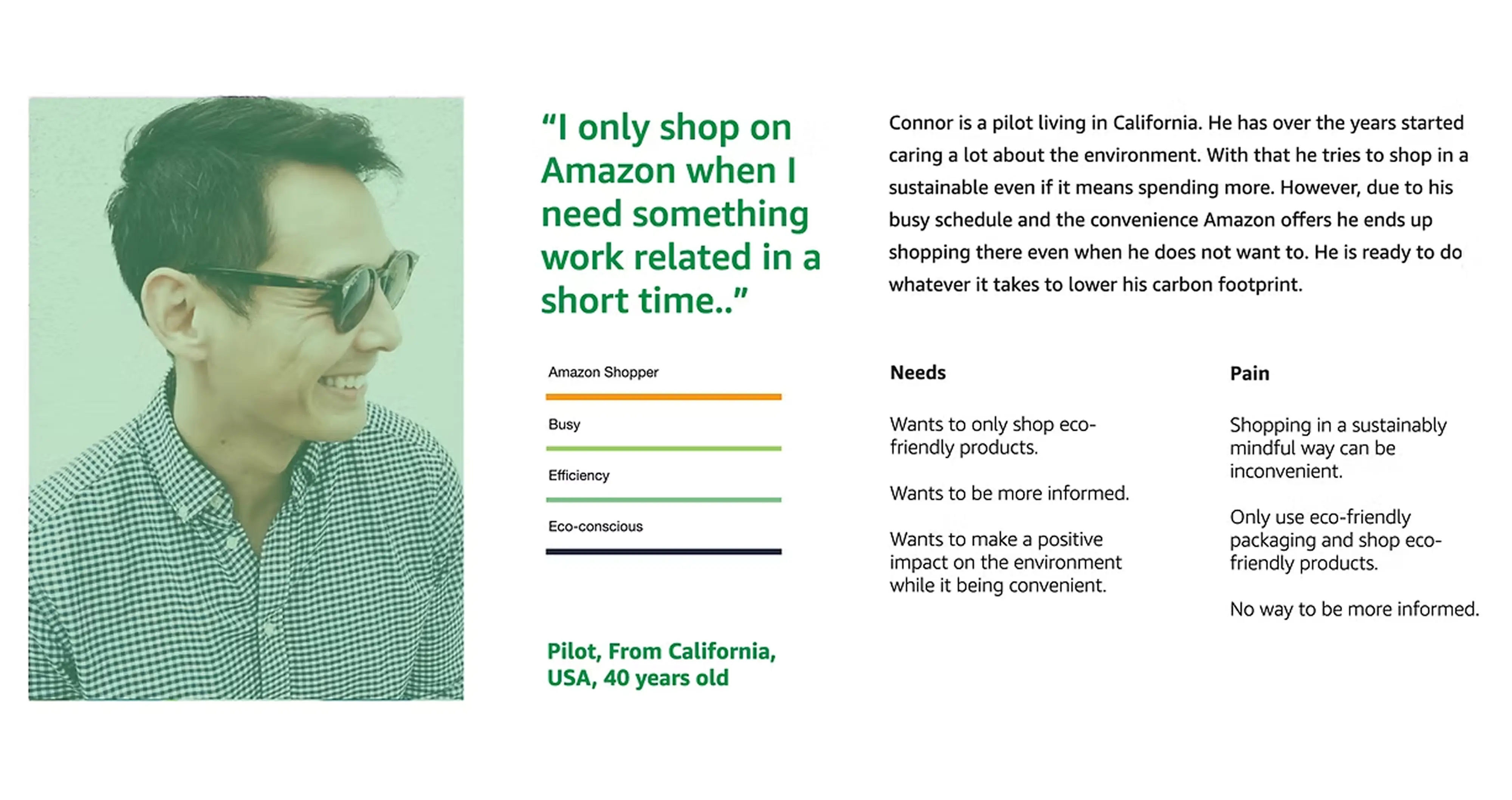
During my research, I found out that there are two types of eco-conscious users: one being the settled working professionals and the other being the struggling new workers.

Current User Journey

Mapping the Current System

Prototyping and User Testing.
After the research, I designed my first round of wireframes. The initial set of designs included a membership to Amazon Green, an algorithm for displaying eco-friendly alternatives, a green label, filter and sort options, a breakdown of a product's sustainability, eco-friendly packaging, incentives for no-rush delivery, a rewards system, and a way to track your impact through a point system.
After the research, I designed my first round of wireframes. The initial set of designs included a membership to Amazon Green, an algorithm for displaying eco-friendly alternatives, a green label, filter and sort options, a breakdown of a product's sustainability, eco-friendly packaging, incentives for no-rush delivery, a rewards system, and a way to track your impact through a point system.
After the research, I designed my first round of wireframes. The initial set of designs included a membership to Amazon Green, an algorithm for displaying eco-friendly alternatives, a green label, filter and sort options, a breakdown of a product's sustainability, eco-friendly packaging, incentives for no-rush delivery, a rewards system, and a way to track your impact through a point system.
After the research, I designed my first round of wireframes. The initial set of designs included a membership to Amazon Green, an algorithm for displaying eco-friendly alternatives, a green label, filter and sort options, a breakdown of a product's sustainability, eco-friendly packaging, incentives for no-rush delivery, a rewards system, and a way to track your impact through a point system.
After the research, I designed my first round of wireframes. The initial set of designs included a membership to Amazon Green, an algorithm for displaying eco-friendly alternatives, a green label, filter and sort options, a breakdown of a product's sustainability, eco-friendly packaging, incentives for no-rush delivery, a rewards system, and a way to track your impact through a point system.
Round 1 of User Testing, 4 participants
Users indicated that they want to understand the criteria used to measure the sustainability of products.
Users were unable to assess their carbon footprint due to the use of pounds in the display.
Users were concerned that this might lead to more online purchases that are not sustainable.
Changes made after Round 1
A way to show the lifecycle and other relevant information about a product, as well as indicate the carbon footprint in more understandable language.
A feature that encourages walking to a store.
Round 2 of User Testing, 3 participants
Users are confused if carbon footprint is an effective way to show whether an item is sustainable or not.
Users indicated that they’d like to know more about their performance on the “Impact” screen.
Users also indicated that they’d like to know more about Amazon Green before installing it.
Changes made after Round 2
Use icons to show sustainability (encompassing all the elements that determine it) rather than just the carbon footprint.
A screen dedicated to providing more information about Amazon Green with a succinct brand identity.
Add more features to the Impact screen that display a person's performance and recognize the most sustainable individuals in the neighborhood.
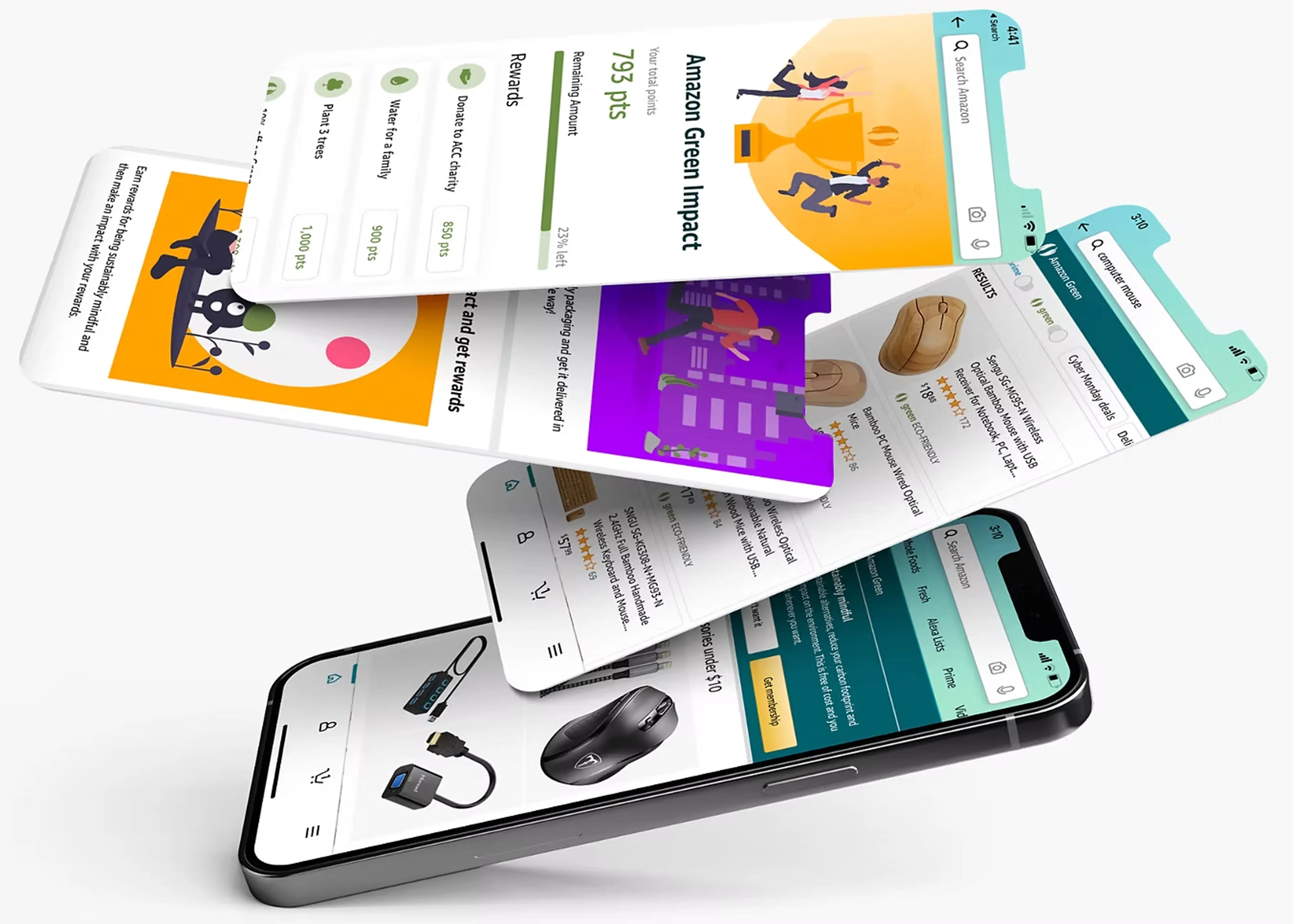
Amazon Green, a service that helps users shop in a sustainably mindful way on AWS app.
ONBOARDING
Amazon Green presents itself in the form of a pop-up box. When selected, users are taken to the Amazon Green page where they can learn more about the subscription and choose to subscribe to it or not.
When subscribing, users have the option to let Amazon make the most sustainable choices for them by default or to make those choices themselves.

HOME AND FILTER
The feed has a section dedicated to eco-friendly products as well as a filter that helps you filter eco-friendly products.
The green label appears next to all the products that are relatively sustainable.
PRODUCT SELECTION
When on the detail page, users are shown a complete breakdown of how sustainable a product is.
Depending on the product they’re encouraged to go for a more sustainable alternative in the same price range and buy multiple products together.
CHECKOUT
On checkout, along with the price total, users are informed about their green impact total. They are then given green choices for packaging and delivery.
Users can go for eco-friendly packaging and no rush delivery.
WALK TO A STORE
Users are encouraged to walk to the green local partnering stores of Amazon to encourage sustainable behavior.
Users can choose the store they want to walk to, walk there and get points for their efforts.
GREEN IMPACT
Users can know their green impact by showing their points, the rewards they can get, and their performance graph.
They are also able to look at the best scores in the area to give a sense of recognition to those who are being sustainably mindful.
Reminders and Check-ins

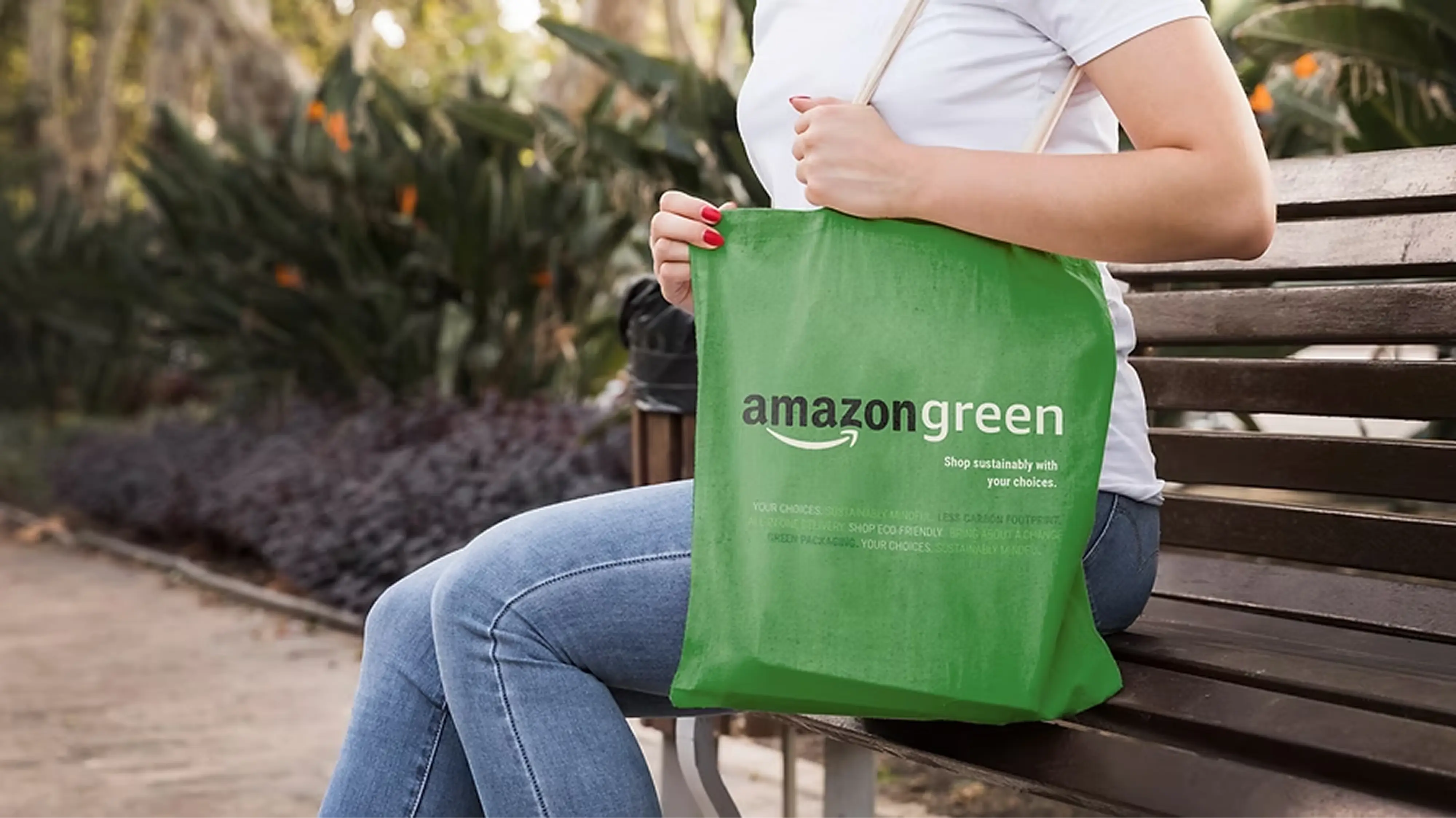
Eco-friendly Packaging
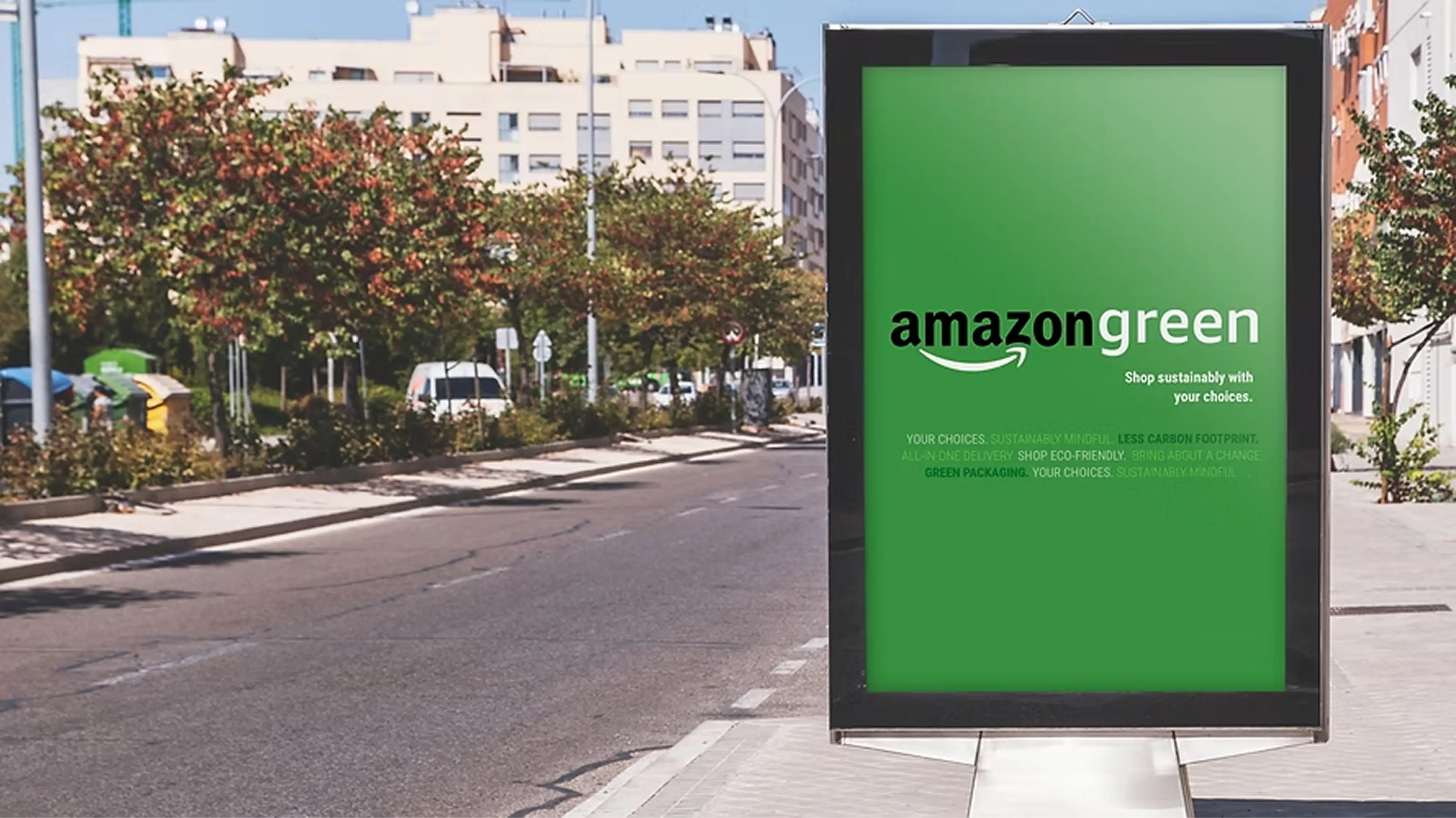
Green Banner
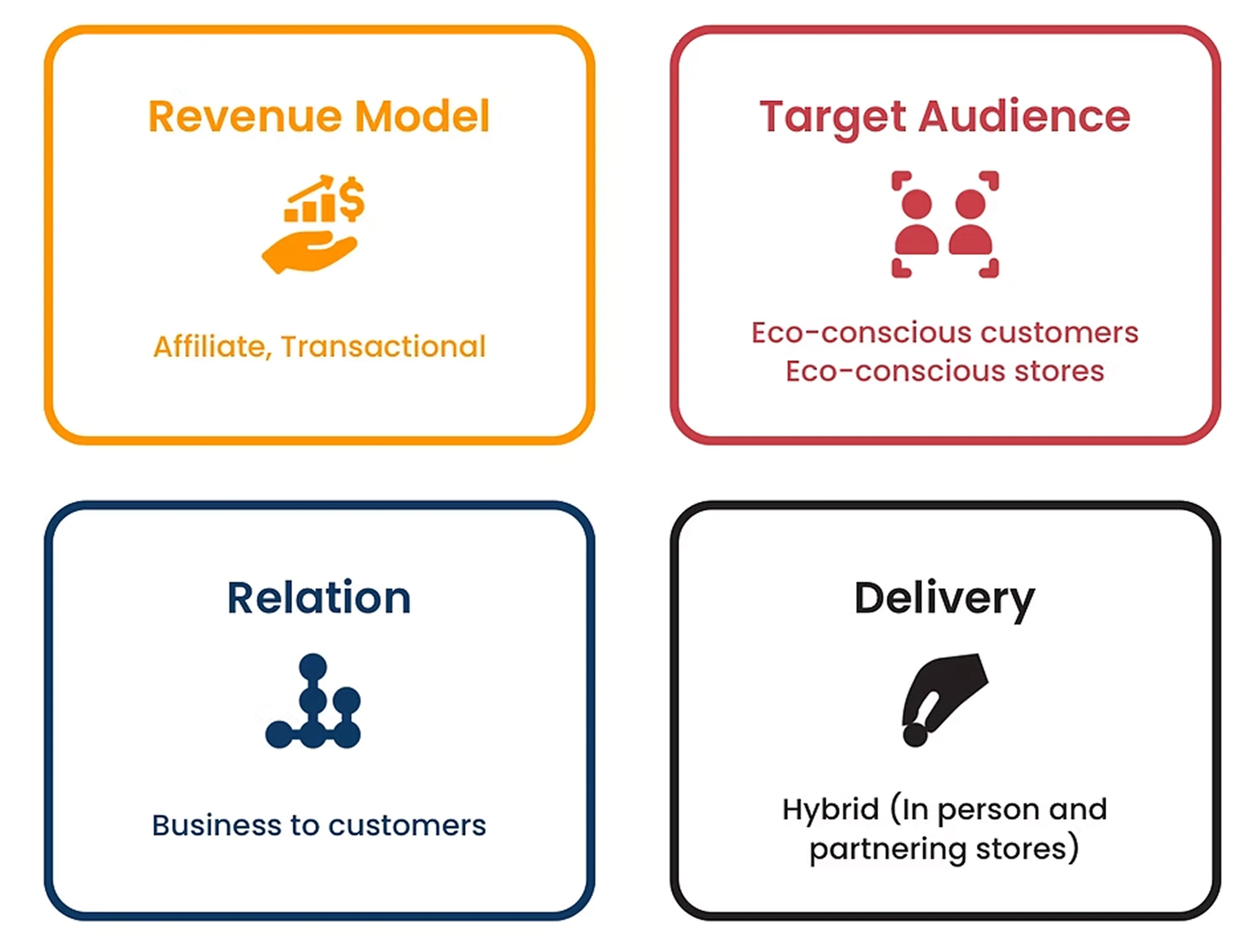
Business plan
A mutually beneficial relationship where eco-conscious get to shop sustainably at Amazon and Amazon gets their trust.

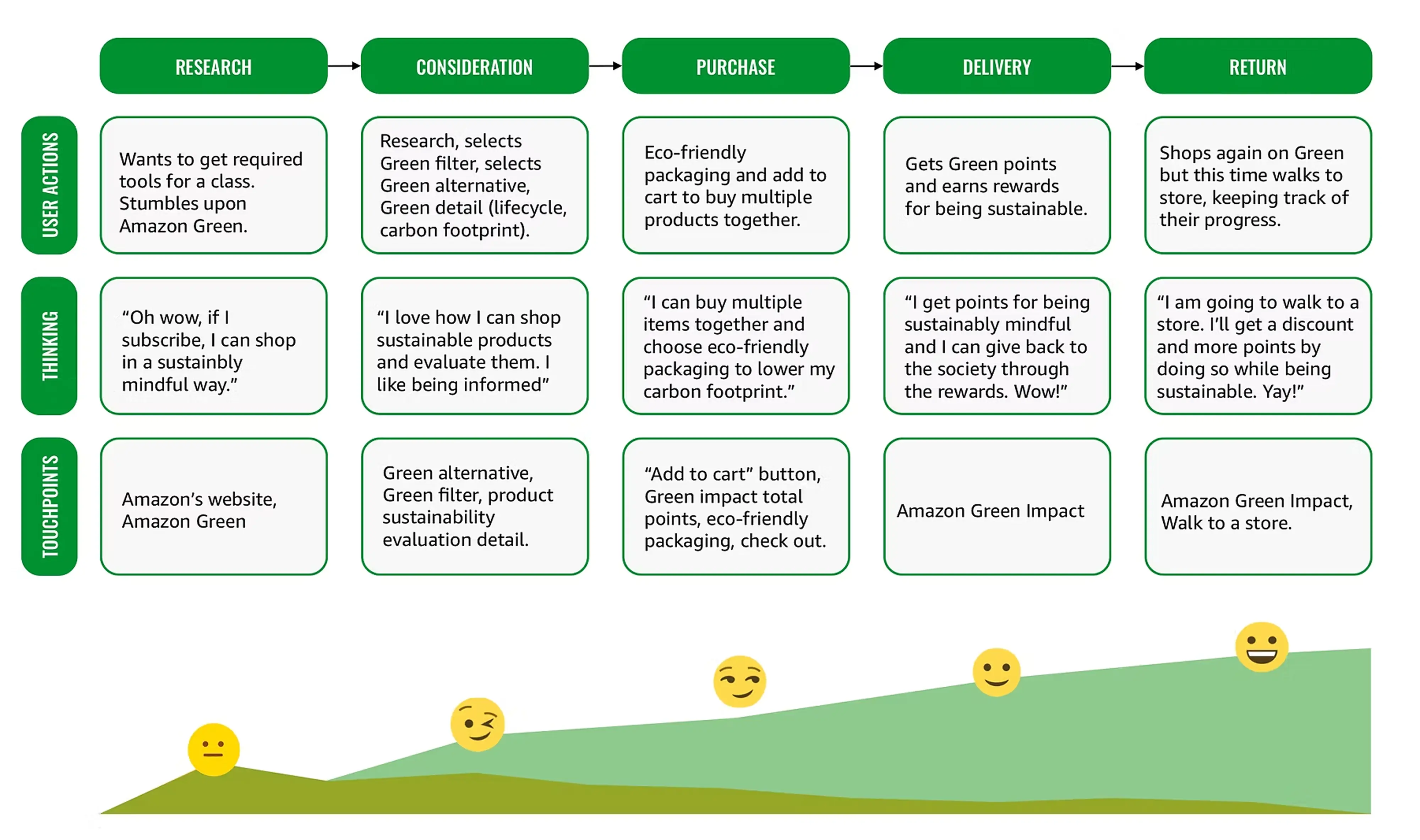
Future User Journey
Reflection
This project was a challenging and rewarding endeavor that required in-depth research to identify the crucial components of a thriving company and understand their interconnections. I engaged with users through various means, including surveys, interviews, and user testing, which helped me refine the design of my prototype. The project was a blend of independent work, where I set my own deadlines, and collaboration through weekly check-ins and feedback sessions with my peers and Professor Gretchen Anderson. I am truly grateful for Professor Anderson's invaluable guidance and support throughout the project.
Citation:-
https://ca.audubon.org/news/salton-sea-collapsing
https://thenounproject.com/search/?q=give
https://blog.globalwebindex.com/chart-of-the-week/green-consumerism/
https://www.prnewswire.com/news-releases/survey-millennials-less-likely-to-recycle-but-more-likely-to-buy-from-companies-that-go-green-300522713.html
https://www.marketingweek.com/brands-sustainability-convenience/

©2026 | Sarah Zaheer
R
TIME:
01:30 AM
PST
s
a
r
a
h
z
a
h
e
e
r
Amazon Green
Green helps customers shop more sustainably with eco-friendly products, packaging, and delivery options. Customers earn points for greener choices, which can be redeemed for exclusive rewards.
Project:
Personal Thesis Project
Time:
20 weeks
Role:
UX Designer role
The e-commerce channel today is the biggest contributor to pollution. In response, Green, which will be a part of Amazon (a leading e-commerce company), will help customers make sustainably mindful decisions while shopping on their AWS app.
These choices will include shopping for eco-friendly products, opting for green packaging and sustainable shipping options, and walking to a store. As an incentive, green shoppers will earn points for their efforts, which can be used to receive rewards that contribute to giving back to society.
The Problem
With the click of a button, our groceries, clothes, personal care products, household items – just about anything could arrive on our doorsteps in a neatly packaged cardboard box. It’s convenient and delivered right to us, but at what cost?
Online purchases in the US approached $400 billion in 2016 and now account for 8% of overall retail spending. On average, the e-commerce channel tends to produce more emissions per item for three reasons: it requires additional packaging, customers purchase fewer items per transaction, and multi-item orders often lead to multiple deliveries. As shopper demands increase, so does their carbon footprint, resulting in a negative impact on the environment and promoting unsustainability.
Concept Testing
Determine whether eco-conscious consumers are willing to change their behavior to be more sustainably mindful while shopping online, and if the concept is worth pursuing.
12 participants
Preference for Sustainability: The majority of users want e-commerce sites to be more environmentally conscious.
Carbon Footprint Display: Users support the idea of displaying carbon footprints but are concerned about potential disruptions or inconveniences to their shopping experience.
Trust Issues: There is skepticism about the authenticity of sustainability algorithms, with users seeking reliable safeguards to ensure accuracy.
Tangible Impact: Users appreciate the concept of converting reduced carbon footprints into tangible environmental benefits, such as saving trees.
Competitive Analysis
Understanding what the competitors are doing to encourage sustainability or support other partnering apps.
Carbon Calculator: An extension that displays the carbon footprint of a product on Amazon.
Shopify: A 3rd party app that offers online retailers services like payments, marketing, shipping and, customer engagement tools.
Carbon Neutral shopping: An extension that displays eco-friendly apps and gives users points as an incentive to shop from there.
How might we help customers be more environmentally conscious while shopping on an e-commerce platform?
User Research
To understand users’ needs and frustrations as they shop on Amazon while trying to be sustainably mindful. Further, identifying opportunity areas.
4 participants
Majority of the participants that Amazon makes it hard for users to shop in a sustainably mindful way even when they are motivated to.
Participants want to shop in a sustainably mindful way but not to an extent where it becomes inconvenient or difficult to do for them.
Participants also indicated that they’d want some sort of incentive for being sustainable.
Participants expressed their concern about “greenwashing” and how a lot of e-commerce websites are doing that including Amazon.
“I’d like to see my change in behavior actually lead to an output like trees being grown because of my small efforts maybe beyond just you being good.. That would encourage me.” - (PC, 21)
“It is frustrating to see these websites greenwash when they are not sustainable. Like how can you offer cheap prices, have fast shipping, use plastic packaging and then promote sustainability” - (GA, 24)
User Personas
During my research, I found out that there are two types of eco-conscious users: one being the settled working professionals and the other being the struggling new workers.
Current User Journey
Mapping the Current System
Prototyping and User Testing.
After the research, I designed my first round of wireframes. The initial set of designs included a membership to Amazon Green, an algorithm for displaying eco-friendly alternatives, a green label, filter and sort options, a breakdown of a product's sustainability, eco-friendly packaging, incentives for no-rush delivery, a rewards system, and a way to track your impact through a point system.
After the research, I designed my first round of wireframes. The initial set of designs included a membership to Amazon Green, an algorithm for displaying eco-friendly alternatives, a green label, filter and sort options, a breakdown of a product's sustainability, eco-friendly packaging, incentives for no-rush delivery, a rewards system, and a way to track your impact through a point system.
After the research, I designed my first round of wireframes. The initial set of designs included a membership to Amazon Green, an algorithm for displaying eco-friendly alternatives, a green label, filter and sort options, a breakdown of a product's sustainability, eco-friendly packaging, incentives for no-rush delivery, a rewards system, and a way to track your impact through a point system.
After the research, I designed my first round of wireframes. The initial set of designs included a membership to Amazon Green, an algorithm for displaying eco-friendly alternatives, a green label, filter and sort options, a breakdown of a product's sustainability, eco-friendly packaging, incentives for no-rush delivery, a rewards system, and a way to track your impact through a point system.
After the research, I designed my first round of wireframes. The initial set of designs included a membership to Amazon Green, an algorithm for displaying eco-friendly alternatives, a green label, filter and sort options, a breakdown of a product's sustainability, eco-friendly packaging, incentives for no-rush delivery, a rewards system, and a way to track your impact through a point system.
Round 1 of User Testing, 4 participants
Users indicated that they want to understand the criteria used to measure the sustainability of products.
Users were unable to assess their carbon footprint due to the use of pounds in the display.
Users were concerned that this might lead to more online purchases that are not sustainable.
Changes made after Round 1
A way to show the lifecycle and other relevant information about a product, as well as indicate the carbon footprint in more understandable language.
A feature that encourages walking to a store.
Round 2 of User Testing, 3 participants
Users are confused if carbon footprint is an effective way to show whether an item is sustainable or not.
Users indicated that they’d like to know more about their performance on the “Impact” screen.
Users also indicated that they’d like to know more about Amazon Green before installing it.
Changes made after Round 2
Use icons to show sustainability (encompassing all the elements that determine it) rather than just the carbon footprint.
A screen dedicated to providing more information about Amazon Green with a succinct brand identity.
Add more features to the Impact screen that display a person's performance and recognize the most sustainable individuals in the neighborhood.
Amazon Green, a service that helps users shop in a sustainably mindful way on AWS app.
ONBOARDING
Amazon Green presents itself in the form of a pop-up box. When selected, users are taken to the Amazon Green page where they can learn more about the subscription and choose to subscribe to it or not.
When subscribing, users have the option to let Amazon make the most sustainable choices for them by default or to make those choices themselves.
HOME AND FILTER
The feed has a section dedicated to eco-friendly products as well as a filter that helps you filter eco-friendly products.
The green label appears next to all the products that are relatively sustainable.
PRODUCT SELECTION
When on the detail page, users are shown a complete breakdown of how sustainable a product is.
Depending on the product they’re encouraged to go for a more sustainable alternative in the same price range and buy multiple products together.
CHECKOUT
On checkout, along with the price total, users are informed about their green impact total. They are then given green choices for packaging and delivery.
Users can go for eco-friendly packaging and no rush delivery.
WALK TO A STORE
Users are encouraged to walk to the green local partnering stores of Amazon to encourage sustainable behavior.
Users can choose the store they want to walk to, walk there and get points for their efforts.
GREEN IMPACT
Users can know their green impact by showing their points, the rewards they can get, and their performance graph.
They are also able to look at the best scores in the area to give a sense of recognition to those who are being sustainably mindful.
Reminders and Check-ins
Eco-friendly Packaging
Green Banner
Business plan
A mutually beneficial relationship where eco-conscious get to shop sustainably at Amazon and Amazon gets their trust.
Future User Journey
Reflection
This project was a challenging and rewarding endeavor that required in-depth research to identify the crucial components of a thriving company and understand their interconnections. I engaged with users through various means, including surveys, interviews, and user testing, which helped me refine the design of my prototype. The project was a blend of independent work, where I set my own deadlines, and collaboration through weekly check-ins and feedback sessions with my peers and Professor Gretchen Anderson. I am truly grateful for Professor Anderson's invaluable guidance and support throughout the project.
Citation:-
https://ca.audubon.org/news/salton-sea-collapsing
https://thenounproject.com/search/?q=give
https://blog.globalwebindex.com/chart-of-the-week/green-consumerism/
https://www.prnewswire.com/news-releases/survey-millennials-less-likely-to-recycle-but-more-likely-to-buy-from-companies-that-go-green-300522713.html
https://www.marketingweek.com/brands-sustainability-convenience/
©2026 | Sarah Zaheer
R
TIME:
01:30 AM
PST
s
a
r
a
h
z
a
h
e
e
r
Amazon Green
Green helps customers shop more sustainably with eco-friendly products, packaging, and delivery options. Customers earn points for greener choices, which can be redeemed for exclusive rewards.
Project:
Personal Thesis Project
Time:
20 weeks
Role:
UX Designer role
The e-commerce channel today is the biggest contributor to pollution. In response, Green, which will be a part of Amazon (a leading e-commerce company), will help customers make sustainably mindful decisions while shopping on their AWS app.
These choices will include shopping for eco-friendly products, opting for green packaging and sustainable shipping options, and walking to a store. As an incentive, green shoppers will earn points for their efforts, which can be used to receive rewards that contribute to giving back to society.
The Problem
With the click of a button, our groceries, clothes, personal care products, household items – just about anything could arrive on our doorsteps in a neatly packaged cardboard box. It’s convenient and delivered right to us, but at what cost?
Online purchases in the US approached $400 billion in 2016 and now account for 8% of overall retail spending. On average, the e-commerce channel tends to produce more emissions per item for three reasons: it requires additional packaging, customers purchase fewer items per transaction, and multi-item orders often lead to multiple deliveries. As shopper demands increase, so does their carbon footprint, resulting in a negative impact on the environment and promoting unsustainability.
Concept Testing
Determine whether eco-conscious consumers are willing to change their behavior to be more sustainably mindful while shopping online, and if the concept is worth pursuing.
12 participants
Preference for Sustainability: The majority of users want e-commerce sites to be more environmentally conscious.
Carbon Footprint Display: Users support the idea of displaying carbon footprints but are concerned about potential disruptions or inconveniences to their shopping experience.
Trust Issues: There is skepticism about the authenticity of sustainability algorithms, with users seeking reliable safeguards to ensure accuracy.
Tangible Impact: Users appreciate the concept of converting reduced carbon footprints into tangible environmental benefits, such as saving trees.
Competitive Analysis
Understanding what the competitors are doing to encourage sustainability or support other partnering apps.
Carbon Calculator: An extension that displays the carbon footprint of a product on Amazon.
Shopify: A 3rd party app that offers online retailers services like payments, marketing, shipping and, customer engagement tools.
Carbon Neutral shopping: An extension that displays eco-friendly apps and gives users points as an incentive to shop from there.
How might we help customers be more environmentally conscious while shopping on an e-commerce platform?
User Research
To understand users’ needs and frustrations as they shop on Amazon while trying to be sustainably mindful. Further, identifying opportunity areas.
4 participants
Majority of the participants that Amazon makes it hard for users to shop in a sustainably mindful way even when they are motivated to.
Participants want to shop in a sustainably mindful way but not to an extent where it becomes inconvenient or difficult to do for them.
Participants also indicated that they’d want some sort of incentive for being sustainable.
Participants expressed their concern about “greenwashing” and how a lot of e-commerce websites are doing that including Amazon.
“I’d like to see my change in behavior actually lead to an output like trees being grown because of my small efforts maybe beyond just you being good.. That would encourage me.” - (PC, 21)
“It is frustrating to see these websites greenwash when they are not sustainable. Like how can you offer cheap prices, have fast shipping, use plastic packaging and then promote sustainability” - (GA, 24)
User Personas
During my research, I found out that there are two types of eco-conscious users: one being the settled working professionals and the other being the struggling new workers.
Current User Journey
Mapping the Current System
Prototyping and User Testing.
After the research, I designed my first round of wireframes. The initial set of designs included a membership to Amazon Green, an algorithm for displaying eco-friendly alternatives, a green label, filter and sort options, a breakdown of a product's sustainability, eco-friendly packaging, incentives for no-rush delivery, a rewards system, and a way to track your impact through a point system.
After the research, I designed my first round of wireframes. The initial set of designs included a membership to Amazon Green, an algorithm for displaying eco-friendly alternatives, a green label, filter and sort options, a breakdown of a product's sustainability, eco-friendly packaging, incentives for no-rush delivery, a rewards system, and a way to track your impact through a point system.
After the research, I designed my first round of wireframes. The initial set of designs included a membership to Amazon Green, an algorithm for displaying eco-friendly alternatives, a green label, filter and sort options, a breakdown of a product's sustainability, eco-friendly packaging, incentives for no-rush delivery, a rewards system, and a way to track your impact through a point system.
After the research, I designed my first round of wireframes. The initial set of designs included a membership to Amazon Green, an algorithm for displaying eco-friendly alternatives, a green label, filter and sort options, a breakdown of a product's sustainability, eco-friendly packaging, incentives for no-rush delivery, a rewards system, and a way to track your impact through a point system.
After the research, I designed my first round of wireframes. The initial set of designs included a membership to Amazon Green, an algorithm for displaying eco-friendly alternatives, a green label, filter and sort options, a breakdown of a product's sustainability, eco-friendly packaging, incentives for no-rush delivery, a rewards system, and a way to track your impact through a point system.
Round 1 of User Testing, 4 participants
Users indicated that they want to understand the criteria used to measure the sustainability of products.
Users were unable to assess their carbon footprint due to the use of pounds in the display.
Users were concerned that this might lead to more online purchases that are not sustainable.
Changes made after Round 1
A way to show the lifecycle and other relevant information about a product, as well as indicate the carbon footprint in more understandable language.
A feature that encourages walking to a store.
Round 2 of User Testing, 3 participants
Users are confused if carbon footprint is an effective way to show whether an item is sustainable or not.
Users indicated that they’d like to know more about their performance on the “Impact” screen.
Users also indicated that they’d like to know more about Amazon Green before installing it.
Changes made after Round 2
Use icons to show sustainability (encompassing all the elements that determine it) rather than just the carbon footprint.
A screen dedicated to providing more information about Amazon Green with a succinct brand identity.
Add more features to the Impact screen that display a person's performance and recognize the most sustainable individuals in the neighborhood.
Amazon Green, a service that helps users shop in a sustainably mindful way on AWS app.
ONBOARDING
Amazon Green presents itself in the form of a pop-up box. When selected, users are taken to the Amazon Green page where they can learn more about the subscription and choose to subscribe to it or not.
When subscribing, users have the option to let Amazon make the most sustainable choices for them by default or to make those choices themselves.
HOME AND FILTER
The feed has a section dedicated to eco-friendly products as well as a filter that helps you filter eco-friendly products.
The green label appears next to all the products that are relatively sustainable.
PRODUCT SELECTION
When on the detail page, users are shown a complete breakdown of how sustainable a product is.
Depending on the product they’re encouraged to go for a more sustainable alternative in the same price range and buy multiple products together.
CHECKOUT
On checkout, along with the price total, users are informed about their green impact total. They are then given green choices for packaging and delivery.
Users can go for eco-friendly packaging and no rush delivery.
WALK TO A STORE
Users are encouraged to walk to the green local partnering stores of Amazon to encourage sustainable behavior.
Users can choose the store they want to walk to, walk there and get points for their efforts.
GREEN IMPACT
Users can know their green impact by showing their points, the rewards they can get, and their performance graph.
They are also able to look at the best scores in the area to give a sense of recognition to those who are being sustainably mindful.
Reminders and Check-ins
Eco-friendly Packaging
Green Banner
Business plan
A mutually beneficial relationship where eco-conscious get to shop sustainably at Amazon and Amazon gets their trust.
Future User Journey
Reflection
This project was a challenging and rewarding endeavor that required in-depth research to identify the crucial components of a thriving company and understand their interconnections. I engaged with users through various means, including surveys, interviews, and user testing, which helped me refine the design of my prototype. The project was a blend of independent work, where I set my own deadlines, and collaboration through weekly check-ins and feedback sessions with my peers and Professor Gretchen Anderson. I am truly grateful for Professor Anderson's invaluable guidance and support throughout the project.
Citation:-
https://ca.audubon.org/news/salton-sea-collapsing
https://thenounproject.com/search/?q=give
https://blog.globalwebindex.com/chart-of-the-week/green-consumerism/
https://www.prnewswire.com/news-releases/survey-millennials-less-likely-to-recycle-but-more-likely-to-buy-from-companies-that-go-green-300522713.html
https://www.marketingweek.com/brands-sustainability-convenience/
©2026 | Sarah Zaheer
R
TIME:
01:30 AM
PST
s
a
r
a
h
z
a
h
e
e
r
Menu