Trash It Right
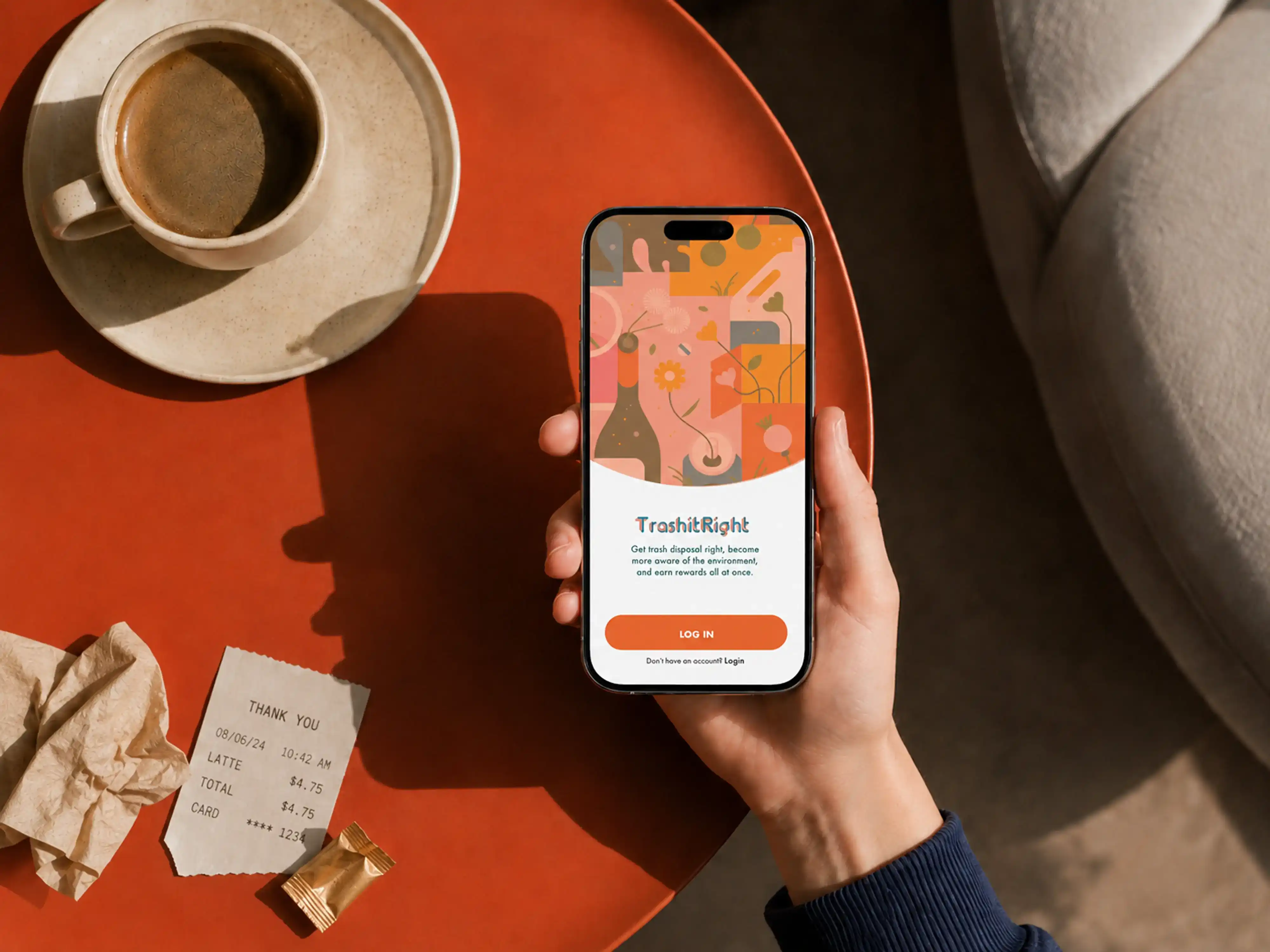
TrashitRight helps people sort and dispose of waste correctly through a physical product and companion app. Users build sustainable habits while earning rewards for responsible disposal.
Project:
Personal Project
Time:
3 weeks
Role:
UX Designer role
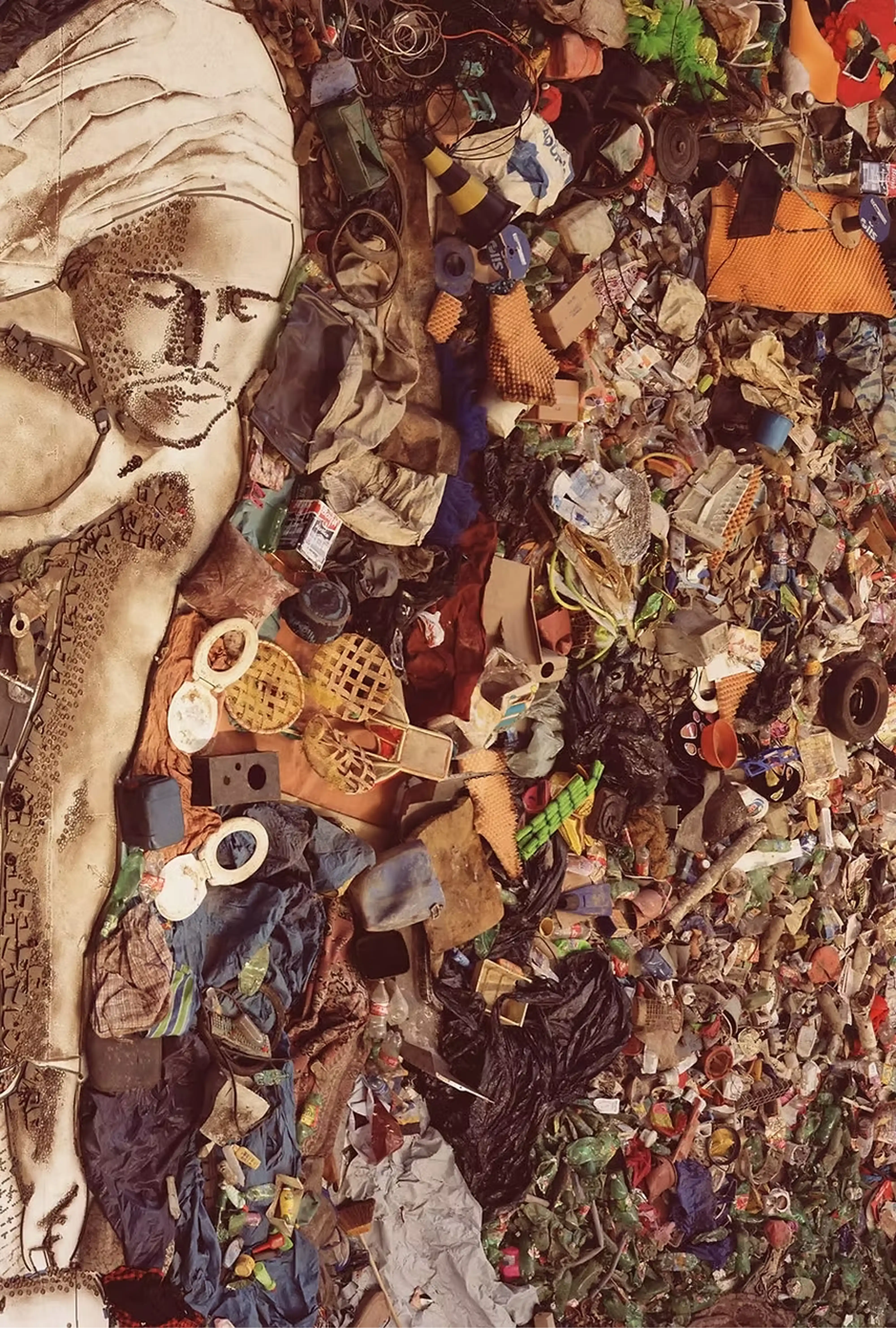
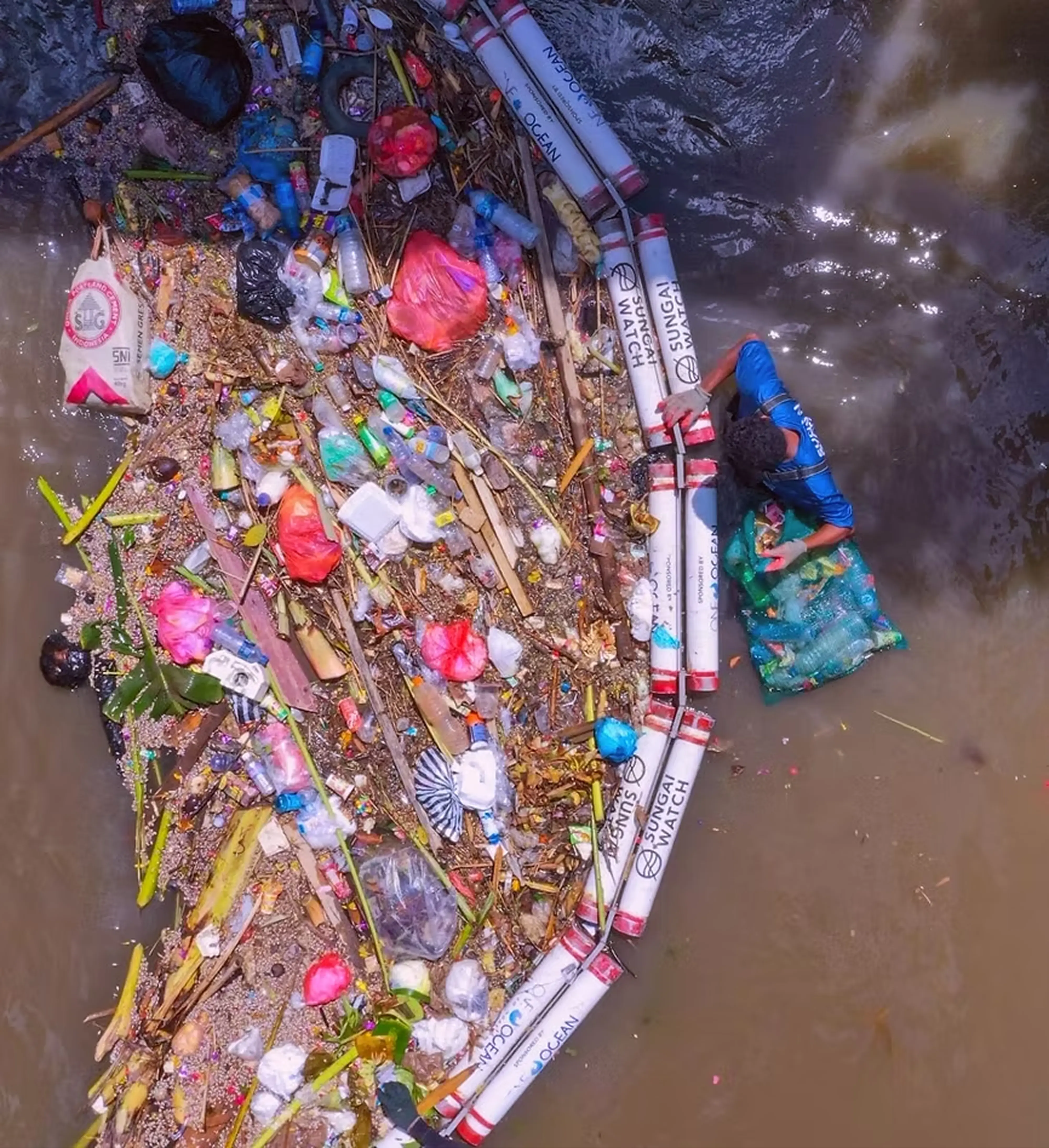
According to a Columbia University study, Americans generate seven pounds of waste per person daily, with 90% of materials either ending up in landfills or being incinerated.
This highlights a significant waste management issue, emphasizing the urgent need for more effective solutions to prevent the loss of valuable resources and mitigate environmental damage.
To address this problem, TrashitRight combines a physical waste-sorting tool with a digital app. The tool uses a projector and camera scanner to identify recyclables, compostables, and general trash, and comes with educational materials for proper waste separation. The app tracks disposal practices, rewards correct sorting, and provides environmental information. Together, these components aim to reduce landfill waste, conserve natural resources, and promote better environmental practices.
Understanding the problem
Secondary research was conducted to understand the importance of correct trash disposal and its environmental effects.
Correct waste disposal is crucial for maintaining the effectiveness of recycling processes and protecting the environment. When 25% of items placed in recycling bins are non-recyclable, it leads to contamination, making it difficult to process recyclable materials effectively. Contaminants can cause recyclable items to end up in landfills, where they contribute to pollution. Additionally, items like plastic bags can damage recycling machinery, leading to increased maintenance costs and operational inefficiencies.
Beyond operational and environmental impacts, improper waste disposal also poses risks to worker safety and reduces the quality of recyclable materials. Contaminated waste can expose recycling workers to hazardous conditions, while the presence of non-recyclable materials diminishes the quality and economic value of the recyclables. Thus, correct waste disposal is essential for reducing pollution, ensuring efficient recycling, and safeguarding both human and environmental health.
Target Audience
To narrow down the target audience, I conducted secondary research that involved analyzing existing data on recycling behaviors and awareness across different demographics and occupations. This process included reviewing age-specific recycling patterns and understanding occupational awareness regarding waste disposal.
This helped focus on specific segments based on their recycling habits and knowledge.
By Age Group
Only 49% of individuals aged 16 to 34 recycle "all they can," while 70% of those aged 35 to 54 do. Among people aged 55 to 74, 83% recycle fully, and 81% of those aged 75 and older also report recycling "all they can."
By Occupation
College Students: About 18% feel they have a strong understanding of correct waste disposal. Despite extensive media coverage on environmental issues, their awareness is often superficial. They recognize the problem but lack clear guidance on how to address it.
Competitive Analysis
Understanding how competitors are addressing the complex problem of waste disposal solutions.
EcoSmart: An app that provides information on recyclable materials, recycling processes, and local recycling policies.
iRecycle: This app provides U.S. residents with access to over 1,600,000 recycling options for more than 350 materials, including information on local recycling centers and preparation tips.
Waukesha County Recycles: Educates Waukesha County residents on what can be recycled, proper recycling practices, and safe disposal methods to improve local recycling efforts.
How might we increase people’s awareness of environmental issues and ensure they manage their trash disposal correctly?
User Research
To understand users' needs and frustrations with waste disposal, I conducted 2 interviews and collected 36 survey responses to identify key areas for improvement.
Interview Insights
There is a lack of education on sustainable waste disposal. People are generally not taught about it and are unaware of resources to gain this knowledge.
Many people use the term "safe" to describe where they throw their trash, indicating a concern for making the right choice.
People often rely on color associations with trash bins, but these associations are not universally reliable, as they vary by location.
Individuals often find it inconvenient to research proper disposal methods and may rely on intuition instead.
This issue affects both international and local students.
I usually just put most of my trash in the landfill. Honestly, the recycling rules are so confusing and inconsistent, and I never really know what to do with different types of waste. It feels like too much effort to figure out, so it's easier just to throw everything away. - (Yagya, 24, CA)
"Coming from India, where a systematic approach to trash disposal is not followed, I have not been educated about it. Moreover, in many places, the system relies on colors without any signs, which can be confusing. For example, in India, green is used for recycling." - (Pari, 21, CA)
Survey Insights
High Environmental Awareness: A substantial majority of participants (75.0%) rate themselves as highly environmentally conscious, with 44.4% rating themselves at the highest level (5) and 30.6% at the second highest level (4). This indicates a strong awareness and concern for environmental issues among respondents.
Understanding vs. Practice: Despite a high level of understanding of waste sorting (55.6% rated their understanding as 7.5 or 10), 83.3% of participants report difficulties in sorting their trash correctly. This suggests that having knowledge alone does not always translate into effective practice.
Main Issues with Sorting: The predominant issue is uncertainty about which trash goes into which bin, reported by 61.1% of participants. Other challenges include difficulty finding trash bins (22.2%) and forgetting to sort trash (8.3%). These issues indicate a need for clearer guidance and improved infrastructure.
Concern vs. Action: While a significant portion of participants express concern for proper waste disposal (72.2% either care or care somewhat), there is a noticeable gap between this concern and actual waste sorting practices. This suggests that more needs to be done to bridge the gap between awareness and effective action, potentially through better education and convenience.
Dispose correctly, earn rewards, and become more aware of the environment!

The Application
The first part of the project involves an app that complements its physical counterpart (shown below).
This app leverages gamification to encourage proper waste disposal: users earn points by correctly using the physical product to sort and dispose of trash. These points can be redeemed for various rewards, incentivizing correct behavior.
In addition to gamification, the app offers a news section that provides users with the latest updates and most relevant information on environmental issues. This feature helps users stay informed about important topics and trends, fostering greater environmental awareness and understanding of their personal impact.
Furthermore, the app includes a practical map feature that displays the locations of nearby trash bins. This makes it easier for users to find the appropriate disposal points and ensures that they can effectively manage their waste. Overall, the app rewards responsible disposal and educates users for better environmental choices.

The Physical Counterpart: EcoSort Projector
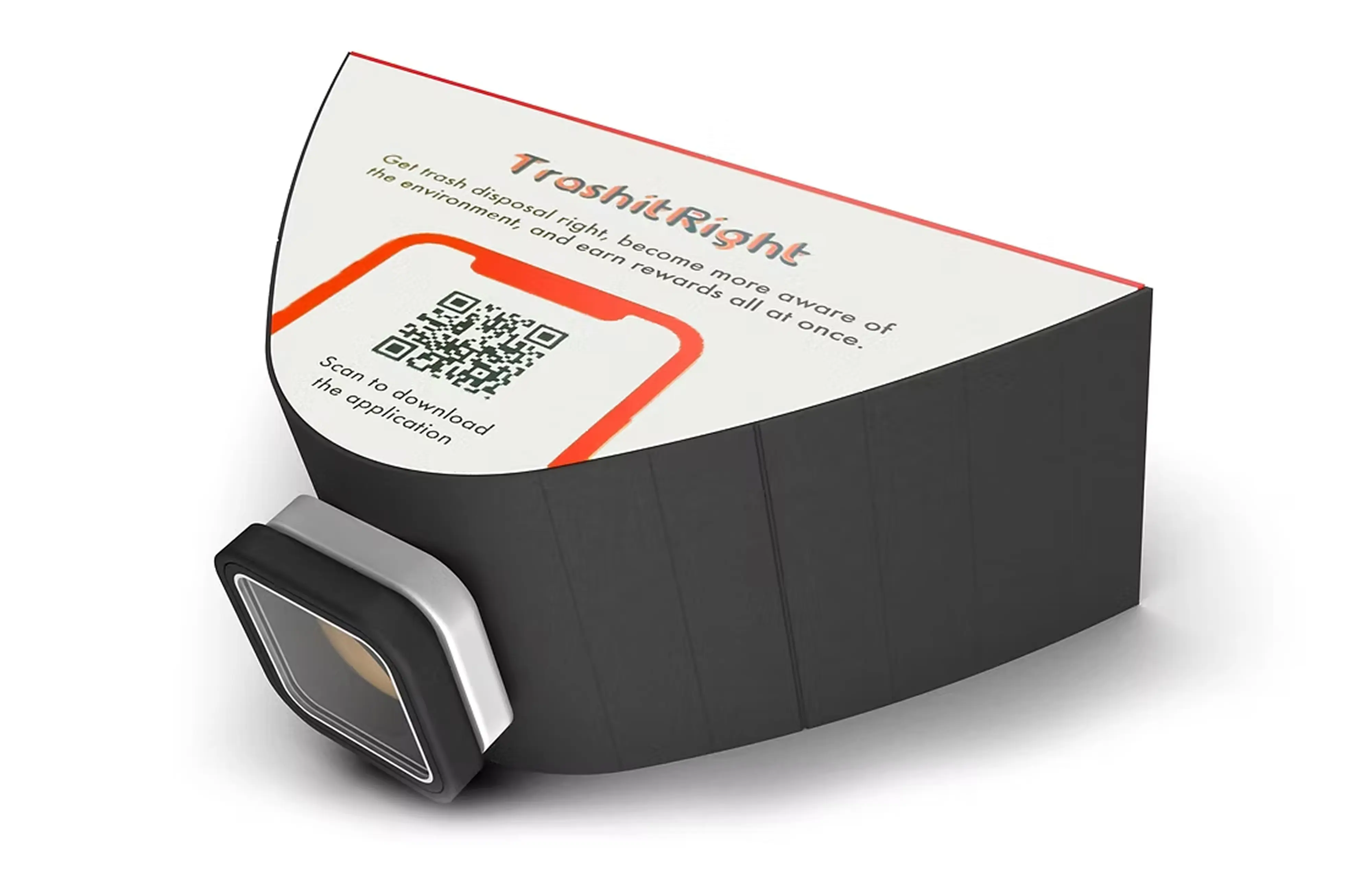
The physical product is a specially designed device that can be placed on top of trash bins. It features both a camera and a projector. Here’s how it works:
Scanning: When a user places trash near the device, its advanced scanner analyzes the material of the waste. This high-tech scanner is capable of distinguishing between different types of materials based on their composition and characteristics.
Classification: After analyzing the trash, the device determines its appropriate disposal category. It classifies the waste into one of three categories: compost, recycle, or landfill.
Projection: Once the classification is complete, the device uses its projector to display the result on a nearby wall. The projected information clearly indicates whether the trash should be placed in a compost bin, recycling bin, or landfill bin.
Product Packaging Design

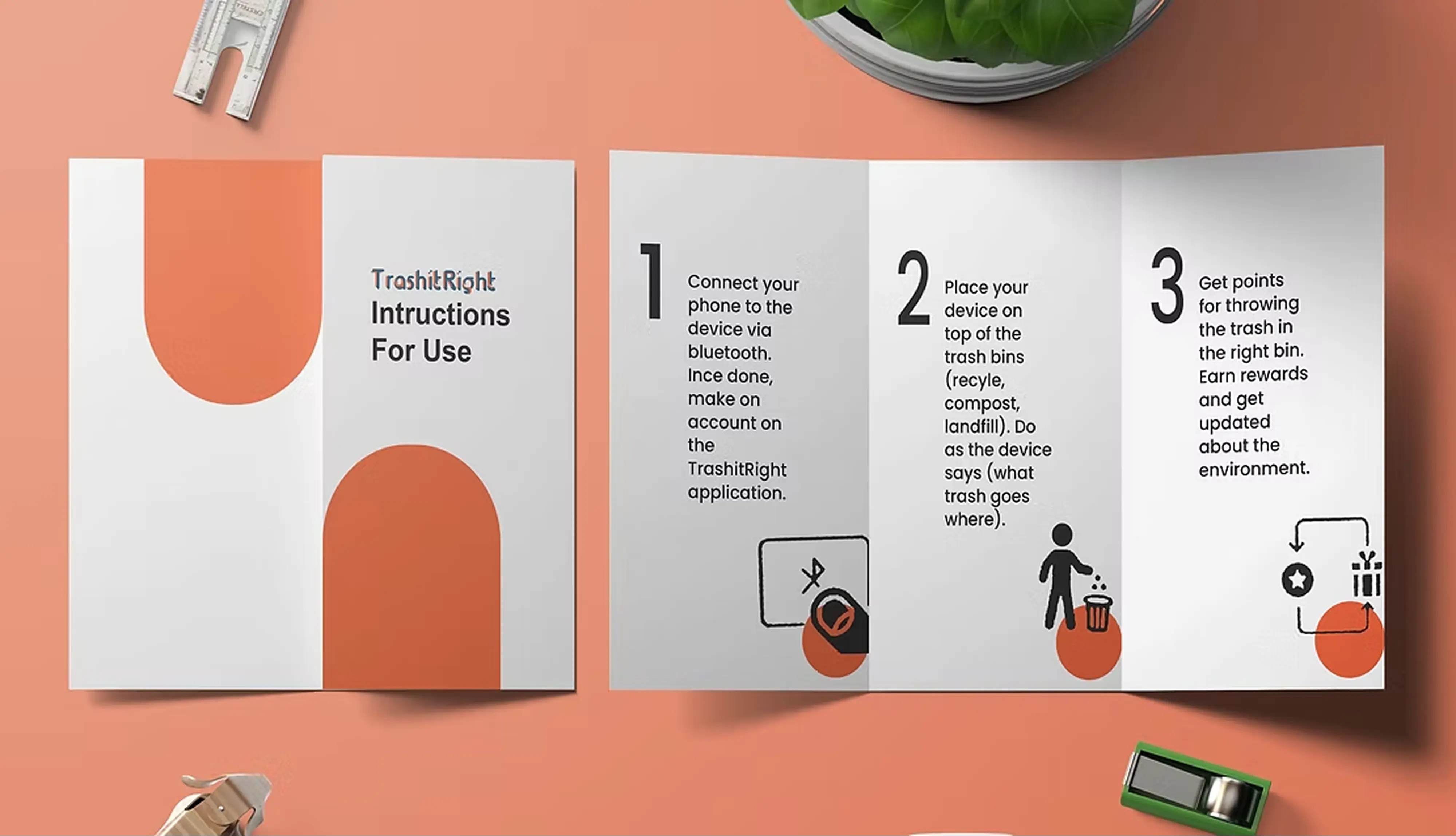
User Manual
Reflection
This project prompted me to consider how my product influences user behavior from the very first interaction. I faced challenges in conceptualizing the product, particularly in addressing the issue of trash disposal. However, through a comprehensive process of brainstorming, prototyping, and iteration, I was able to refine my ideas and converge on a viable solution. I am grateful to Professor Michael Chanover for his invaluable guidance and support throughout this journey.
Moving forward, the next steps involve developing a physical prototype that accommodates not only compost, recycling, and landfill bins but also multi-compartment bins. Additionally, I plan to conduct extensive usability testing over several months to assess the effectiveness of the product in encouraging and sustaining behavioral change.
Citation:-

©2026 | Sarah Zaheer
R
TIME:
01:30 AM
PST
s
a
r
a
h
z
a
h
e
e
r
Trash It Right
TrashitRight helps people sort and dispose of waste correctly through a physical product and companion app. Users build sustainable habits while earning rewards for responsible disposal.
Project:
Personal Project
Time:
3 weeks
Role:
UX Designer role
According to a Columbia University study, Americans generate seven pounds of waste per person daily, with 90% of materials either ending up in landfills or being incinerated.
This highlights a significant waste management issue, emphasizing the urgent need for more effective solutions to prevent the loss of valuable resources and mitigate environmental damage.
To address this problem, TrashitRight combines a physical waste-sorting tool with a digital app. The tool uses a projector and camera scanner to identify recyclables, compostables, and general trash, and comes with educational materials for proper waste separation. The app tracks disposal practices, rewards correct sorting, and provides environmental information. Together, these components aim to reduce landfill waste, conserve natural resources, and promote better environmental practices.
Understanding the problem
Secondary research was conducted to understand the importance of correct trash disposal and its environmental effects.
Correct waste disposal is crucial for maintaining the effectiveness of recycling processes and protecting the environment. When 25% of items placed in recycling bins are non-recyclable, it leads to contamination, making it difficult to process recyclable materials effectively. Contaminants can cause recyclable items to end up in landfills, where they contribute to pollution. Additionally, items like plastic bags can damage recycling machinery, leading to increased maintenance costs and operational inefficiencies.
Beyond operational and environmental impacts, improper waste disposal also poses risks to worker safety and reduces the quality of recyclable materials. Contaminated waste can expose recycling workers to hazardous conditions, while the presence of non-recyclable materials diminishes the quality and economic value of the recyclables. Thus, correct waste disposal is essential for reducing pollution, ensuring efficient recycling, and safeguarding both human and environmental health.
Target Audience
To narrow down the target audience, I conducted secondary research that involved analyzing existing data on recycling behaviors and awareness across different demographics and occupations. This process included reviewing age-specific recycling patterns and understanding occupational awareness regarding waste disposal.
This helped focus on specific segments based on their recycling habits and knowledge.
By Age Group
Only 49% of individuals aged 16 to 34 recycle "all they can," while 70% of those aged 35 to 54 do. Among people aged 55 to 74, 83% recycle fully, and 81% of those aged 75 and older also report recycling "all they can."
By Occupation
College Students: About 18% feel they have a strong understanding of correct waste disposal. Despite extensive media coverage on environmental issues, their awareness is often superficial. They recognize the problem but lack clear guidance on how to address it.
Competitive Analysis
Understanding how competitors are addressing the complex problem of waste disposal solutions.
EcoSmart: An app that provides information on recyclable materials, recycling processes, and local recycling policies.
iRecycle: This app provides U.S. residents with access to over 1,600,000 recycling options for more than 350 materials, including information on local recycling centers and preparation tips.
Waukesha County Recycles: Educates Waukesha County residents on what can be recycled, proper recycling practices, and safe disposal methods to improve local recycling efforts.
How might we increase people’s awareness of environmental issues and ensure they manage their trash disposal correctly?
User Research
To understand users' needs and frustrations with waste disposal, I conducted 2 interviews and collected 36 survey responses to identify key areas for improvement.
Interview Insights
There is a lack of education on sustainable waste disposal. People are generally not taught about it and are unaware of resources to gain this knowledge.
Many people use the term "safe" to describe where they throw their trash, indicating a concern for making the right choice.
People often rely on color associations with trash bins, but these associations are not universally reliable, as they vary by location.
Individuals often find it inconvenient to research proper disposal methods and may rely on intuition instead.
This issue affects both international and local students.
I usually just put most of my trash in the landfill. Honestly, the recycling rules are so confusing and inconsistent, and I never really know what to do with different types of waste. It feels like too much effort to figure out, so it's easier just to throw everything away. - (Yagya, 24, CA)
"Coming from India, where a systematic approach to trash disposal is not followed, I have not been educated about it. Moreover, in many places, the system relies on colors without any signs, which can be confusing. For example, in India, green is used for recycling." - (Pari, 21, CA)
Survey Insights
High Environmental Awareness: A substantial majority of participants (75.0%) rate themselves as highly environmentally conscious, with 44.4% rating themselves at the highest level (5) and 30.6% at the second highest level (4). This indicates a strong awareness and concern for environmental issues among respondents.
Understanding vs. Practice: Despite a high level of understanding of waste sorting (55.6% rated their understanding as 7.5 or 10), 83.3% of participants report difficulties in sorting their trash correctly. This suggests that having knowledge alone does not always translate into effective practice.
Main Issues with Sorting: The predominant issue is uncertainty about which trash goes into which bin, reported by 61.1% of participants. Other challenges include difficulty finding trash bins (22.2%) and forgetting to sort trash (8.3%). These issues indicate a need for clearer guidance and improved infrastructure.
Concern vs. Action: While a significant portion of participants express concern for proper waste disposal (72.2% either care or care somewhat), there is a noticeable gap between this concern and actual waste sorting practices. This suggests that more needs to be done to bridge the gap between awareness and effective action, potentially through better education and convenience.
Dispose correctly, earn rewards, and become more aware of the environment!
The Application
The first part of the project involves an app that complements its physical counterpart (shown below).
This app leverages gamification to encourage proper waste disposal: users earn points by correctly using the physical product to sort and dispose of trash. These points can be redeemed for various rewards, incentivizing correct behavior.
In addition to gamification, the app offers a news section that provides users with the latest updates and most relevant information on environmental issues. This feature helps users stay informed about important topics and trends, fostering greater environmental awareness and understanding of their personal impact.
Furthermore, the app includes a practical map feature that displays the locations of nearby trash bins. This makes it easier for users to find the appropriate disposal points and ensures that they can effectively manage their waste. Overall, the app rewards responsible disposal and educates users for better environmental choices.
The Physical Counterpart: EcoSort Projector
The physical product is a specially designed device that can be placed on top of trash bins. It features both a camera and a projector. Here’s how it works:
Scanning: When a user places trash near the device, its advanced scanner analyzes the material of the waste. This high-tech scanner is capable of distinguishing between different types of materials based on their composition and characteristics.
Classification: After analyzing the trash, the device determines its appropriate disposal category. It classifies the waste into one of three categories: compost, recycle, or landfill.
Projection: Once the classification is complete, the device uses its projector to display the result on a nearby wall. The projected information clearly indicates whether the trash should be placed in a compost bin, recycling bin, or landfill bin.
Product Packaging Design
User Manual
Reflection
This project prompted me to consider how my product influences user behavior from the very first interaction. I faced challenges in conceptualizing the product, particularly in addressing the issue of trash disposal. However, through a comprehensive process of brainstorming, prototyping, and iteration, I was able to refine my ideas and converge on a viable solution. I am grateful to Professor Michael Chanover for his invaluable guidance and support throughout this journey.
Moving forward, the next steps involve developing a physical prototype that accommodates not only compost, recycling, and landfill bins but also multi-compartment bins. Additionally, I plan to conduct extensive usability testing over several months to assess the effectiveness of the product in encouraging and sustaining behavioral change.
Citation:-
©2026 | Sarah Zaheer
R
TIME:
01:30 AM
PST
s
a
r
a
h
z
a
h
e
e
r
Trash It Right
TrashitRight helps people sort and dispose of waste correctly through a physical product and companion app. Users build sustainable habits while earning rewards for responsible disposal.
Project:
Personal Project
Time:
3 weeks
Role:
UX Designer role
According to a Columbia University study, Americans generate seven pounds of waste per person daily, with 90% of materials either ending up in landfills or being incinerated.
This highlights a significant waste management issue, emphasizing the urgent need for more effective solutions to prevent the loss of valuable resources and mitigate environmental damage.
To address this problem, TrashitRight combines a physical waste-sorting tool with a digital app. The tool uses a projector and camera scanner to identify recyclables, compostables, and general trash, and comes with educational materials for proper waste separation. The app tracks disposal practices, rewards correct sorting, and provides environmental information. Together, these components aim to reduce landfill waste, conserve natural resources, and promote better environmental practices.
Understanding the problem
Secondary research was conducted to understand the importance of correct trash disposal and its environmental effects.
Correct waste disposal is crucial for maintaining the effectiveness of recycling processes and protecting the environment. When 25% of items placed in recycling bins are non-recyclable, it leads to contamination, making it difficult to process recyclable materials effectively. Contaminants can cause recyclable items to end up in landfills, where they contribute to pollution. Additionally, items like plastic bags can damage recycling machinery, leading to increased maintenance costs and operational inefficiencies.
Beyond operational and environmental impacts, improper waste disposal also poses risks to worker safety and reduces the quality of recyclable materials. Contaminated waste can expose recycling workers to hazardous conditions, while the presence of non-recyclable materials diminishes the quality and economic value of the recyclables. Thus, correct waste disposal is essential for reducing pollution, ensuring efficient recycling, and safeguarding both human and environmental health.
Target Audience
To narrow down the target audience, I conducted secondary research that involved analyzing existing data on recycling behaviors and awareness across different demographics and occupations. This process included reviewing age-specific recycling patterns and understanding occupational awareness regarding waste disposal.
This helped focus on specific segments based on their recycling habits and knowledge.
By Age Group
Only 49% of individuals aged 16 to 34 recycle "all they can," while 70% of those aged 35 to 54 do. Among people aged 55 to 74, 83% recycle fully, and 81% of those aged 75 and older also report recycling "all they can."
By Occupation
College Students: About 18% feel they have a strong understanding of correct waste disposal. Despite extensive media coverage on environmental issues, their awareness is often superficial. They recognize the problem but lack clear guidance on how to address it.
Competitive Analysis
Understanding how competitors are addressing the complex problem of waste disposal solutions.
EcoSmart: An app that provides information on recyclable materials, recycling processes, and local recycling policies.
iRecycle: This app provides U.S. residents with access to over 1,600,000 recycling options for more than 350 materials, including information on local recycling centers and preparation tips.
Waukesha County Recycles: Educates Waukesha County residents on what can be recycled, proper recycling practices, and safe disposal methods to improve local recycling efforts.
How might we increase people’s awareness of environmental issues and ensure they manage their trash disposal correctly?
User Research
To understand users' needs and frustrations with waste disposal, I conducted 2 interviews and collected 36 survey responses to identify key areas for improvement.
Interview Insights
There is a lack of education on sustainable waste disposal. People are generally not taught about it and are unaware of resources to gain this knowledge.
Many people use the term "safe" to describe where they throw their trash, indicating a concern for making the right choice.
People often rely on color associations with trash bins, but these associations are not universally reliable, as they vary by location.
Individuals often find it inconvenient to research proper disposal methods and may rely on intuition instead.
This issue affects both international and local students.
I usually just put most of my trash in the landfill. Honestly, the recycling rules are so confusing and inconsistent, and I never really know what to do with different types of waste. It feels like too much effort to figure out, so it's easier just to throw everything away. - (Yagya, 24, CA)
"Coming from India, where a systematic approach to trash disposal is not followed, I have not been educated about it. Moreover, in many places, the system relies on colors without any signs, which can be confusing. For example, in India, green is used for recycling." - (Pari, 21, CA)
Survey Insights
High Environmental Awareness: A substantial majority of participants (75.0%) rate themselves as highly environmentally conscious, with 44.4% rating themselves at the highest level (5) and 30.6% at the second highest level (4). This indicates a strong awareness and concern for environmental issues among respondents.
Understanding vs. Practice: Despite a high level of understanding of waste sorting (55.6% rated their understanding as 7.5 or 10), 83.3% of participants report difficulties in sorting their trash correctly. This suggests that having knowledge alone does not always translate into effective practice.
Main Issues with Sorting: The predominant issue is uncertainty about which trash goes into which bin, reported by 61.1% of participants. Other challenges include difficulty finding trash bins (22.2%) and forgetting to sort trash (8.3%). These issues indicate a need for clearer guidance and improved infrastructure.
Concern vs. Action: While a significant portion of participants express concern for proper waste disposal (72.2% either care or care somewhat), there is a noticeable gap between this concern and actual waste sorting practices. This suggests that more needs to be done to bridge the gap between awareness and effective action, potentially through better education and convenience.
Dispose correctly, earn rewards, and become more aware of the environment!
The Application
The first part of the project involves an app that complements its physical counterpart (shown below).
This app leverages gamification to encourage proper waste disposal: users earn points by correctly using the physical product to sort and dispose of trash. These points can be redeemed for various rewards, incentivizing correct behavior.
In addition to gamification, the app offers a news section that provides users with the latest updates and most relevant information on environmental issues. This feature helps users stay informed about important topics and trends, fostering greater environmental awareness and understanding of their personal impact.
Furthermore, the app includes a practical map feature that displays the locations of nearby trash bins. This makes it easier for users to find the appropriate disposal points and ensures that they can effectively manage their waste. Overall, the app rewards responsible disposal and educates users for better environmental choices.
The Physical Counterpart: EcoSort Projector
The physical product is a specially designed device that can be placed on top of trash bins. It features both a camera and a projector. Here’s how it works:
Scanning: When a user places trash near the device, its advanced scanner analyzes the material of the waste. This high-tech scanner is capable of distinguishing between different types of materials based on their composition and characteristics.
Classification: After analyzing the trash, the device determines its appropriate disposal category. It classifies the waste into one of three categories: compost, recycle, or landfill.
Projection: Once the classification is complete, the device uses its projector to display the result on a nearby wall. The projected information clearly indicates whether the trash should be placed in a compost bin, recycling bin, or landfill bin.
Product Packaging Design
User Manual
Reflection
This project prompted me to consider how my product influences user behavior from the very first interaction. I faced challenges in conceptualizing the product, particularly in addressing the issue of trash disposal. However, through a comprehensive process of brainstorming, prototyping, and iteration, I was able to refine my ideas and converge on a viable solution. I am grateful to Professor Michael Chanover for his invaluable guidance and support throughout this journey.
Moving forward, the next steps involve developing a physical prototype that accommodates not only compost, recycling, and landfill bins but also multi-compartment bins. Additionally, I plan to conduct extensive usability testing over several months to assess the effectiveness of the product in encouraging and sustaining behavioral change.
Citation:-
©2026 | Sarah Zaheer
R
TIME:
01:30 AM
PST
s
a
r
a
h
z
a
h
e
e
r
Menu